
There is something wonderful about walking into a home that immediately feels comfortable.
It might not have the most expensive furniture or the biggest rooms. It may not even look like something from a design magazine. But somehow, the lighting feels right, the sofa looks inviting, and the little details make you want to stay for a while.
That feeling is what good home decor should be about.
For a long time, perfectly matched furniture, empty countertops, and carefully controlled neutral rooms dominated interior design. Today, many homeowners are moving toward something more personal. Warm wood, vintage pieces, layered fabrics, meaningful artwork, books, natural materials, and a little bit of imperfection can make a room feel much more welcoming.
The good news is that you don’t need to completely redecorate your house to get that feeling.
A few thoughtful changes can make a surprisingly big difference.
Here are some of the best cozy home decor ideas to try if you want your home to feel warmer, more relaxed, and more like your own.
1. Start With the Lighting
If a room feels cold even though the furniture is comfortable, take a look at the lighting.
Overhead lights are useful, but relying on one bright ceiling fixture can make a room feel flat and less inviting.
Instead, think in layers.
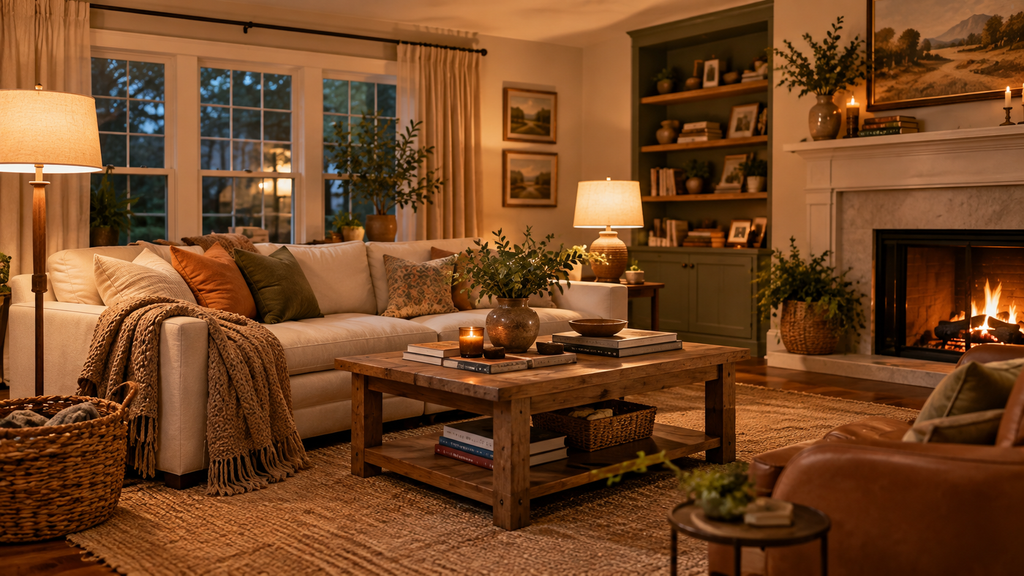
Add a floor lamp beside the sofa, a small table lamp on a console, or a reading lamp next to your favorite chair. This creates several small pools of light instead of illuminating the entire room from one source.
Warm-toned bulbs can also help create a softer atmosphere, especially in living rooms and bedrooms.
You don’t need expensive designer lamps, either. A simple lamp with a linen, paper, ceramic, or fabric shade can add both light and character.
The goal isn’t to make the room darker.
It’s to give yourself control over how the room feels at different times of the day.
2. Bring in More Natural Materials
One of the easiest ways to make a home feel warmer is to introduce materials that have natural texture.
Think about wood, linen, cotton, wool, rattan, stone, leather, and ceramics.
A wooden side table can soften a room filled with painted furniture. A woven basket can add texture beside a sofa. A linen curtain can make a window feel softer without making the space look overly decorated.
You don’t have to replace everything you own.
Instead, look around your room and ask yourself a simple question:
Does everything have the same texture?
If the answer is yes, introduce something different.
A smooth modern sofa next to a rough wooden table and a chunky woven blanket can create much more visual interest than a room where every surface looks identical.
3. Stop Trying to Make Everything Match
A home can look polished without looking like every item was purchased from the same collection.
In fact, a little contrast often makes a room more interesting.
Try combining an older-looking wood table with a modern sofa. Place a vintage-style mirror above a contemporary console. Mix different chair styles around a dining table.
This kind of decorating gives a home personality.
Current design coverage is increasingly emphasizing individuality, collected rooms, vintage pieces, and interiors that feel lived in rather than perfectly coordinated.
If you already own something unusual or slightly imperfect, don’t automatically hide it.
It may be the piece that gives the room character.
4. Make Your Sofa Look Like Somewhere You Want to Sit
A sofa can be the visual center of a living room, but it should also look comfortable.
Start with one or two good throw pillows. Add a soft blanket over one arm or the back corner.
Don’t cover the entire sofa with pillows.
The goal is to make it look inviting without making it difficult for someone to actually sit down.
For a simple look, use different textures rather than lots of different colors.
For example, a cotton pillow, a chunky knit throw, and a linen cushion can create plenty of interest while keeping the overall palette calm.
This is one of those small changes that can make a living room feel noticeably more comfortable without buying new furniture.
5. Create a “Collected” Look With Things You Already Own
One of the most effective decorating tricks may be hiding in your closets.
Instead of immediately buying new accessories, walk around your home and collect objects that have some personal meaning.
Old books.
Family photographs.
A ceramic bowl.
A small painting.
A vase you bought on vacation.
A wooden box.
A favorite candleholder.
These objects can be grouped together on a shelf, coffee table, console, or fireplace mantel.
The secret is not to display everything.
Choose a few items that work together and leave some breathing room around them.
A home feels much more personal when the decoration tells a story.
6. Use Warm Colors Without Repainting the Whole Room
You don’t need to paint your walls dark green or deep brown to create a warm room.
Color can be introduced in much smaller ways.
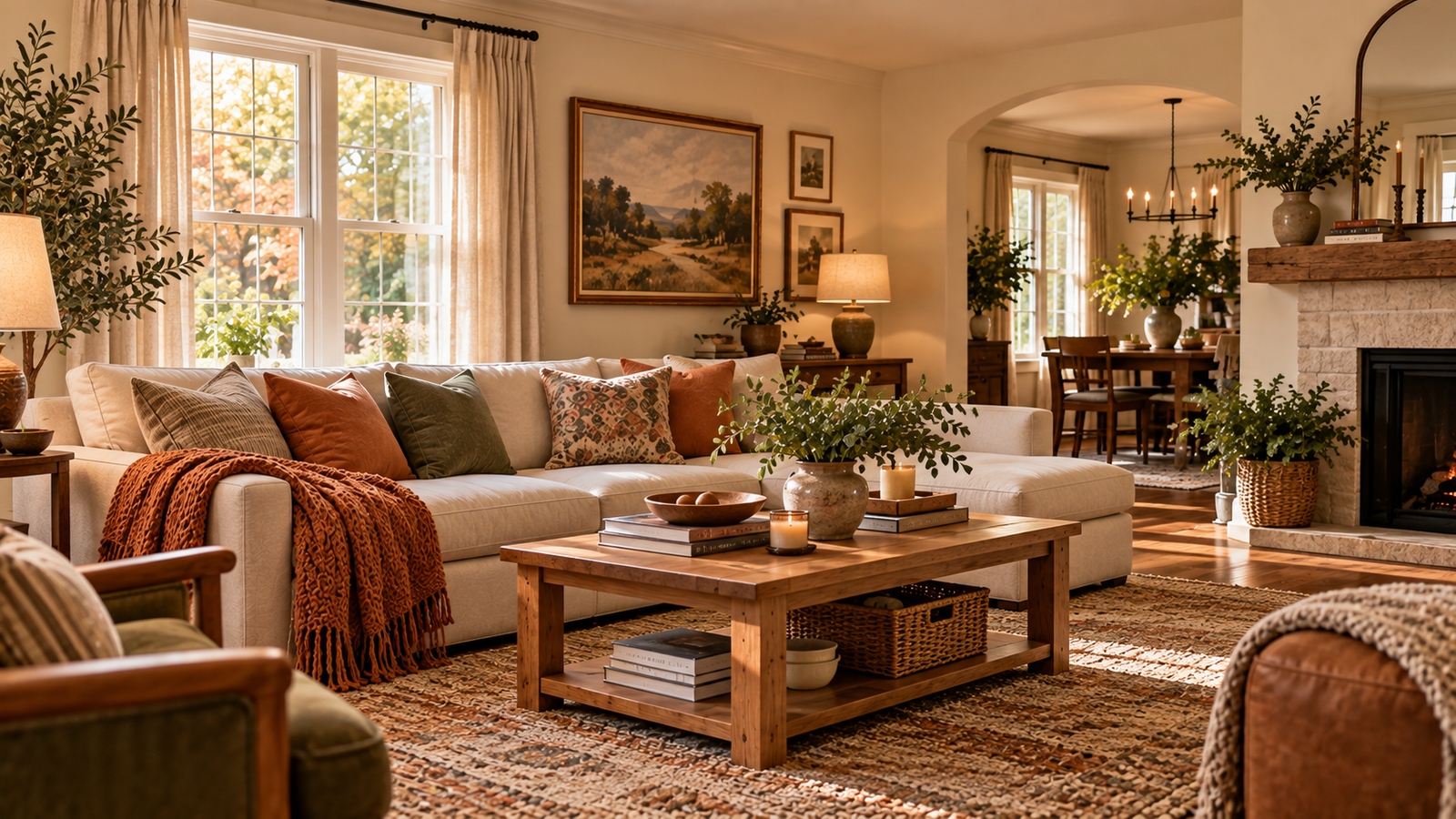
Try terracotta, muted rust, olive green, warm beige, caramel, dusty blue, or soft brown through pillows, artwork, curtains, rugs, and accessories.
Even a small amount of a rich color can change the mood of a neutral room.
For fall, warmer shades can be especially effective, but they don’t have to disappear when winter arrives.
A rust-colored pillow or warm wood accent can work throughout the year.
7. Give Your Walls More Personality
Blank walls aren’t necessarily bad.
But if every wall is completely empty, your home may feel unfinished.
Instead of buying a large collection of matching artwork, try creating a small gallery wall from different pieces.
Family photographs, artwork, vintage prints, botanical illustrations, or even children’s drawings can work together.
The frames don’t necessarily have to match.
A combination of wood, black, brass, or antique-style frames can actually make the display feel more collected.
Before putting holes in the wall, arrange everything on the floor.
Move the pieces around until the arrangement feels balanced.
Then take a quick photograph with your phone.
It gives you a reference when you’re ready to hang everything.
8. Add a Rug Where the Room Needs Softness
A rug can completely change how a room feels.
It adds warmth underfoot, helps define a seating area, and can make furniture feel more connected.
One common mistake is choosing a rug that is too small.
In a living room, the rug should generally relate to the size of the seating arrangement rather than looking like a small island underneath the coffee table.
If you’re unsure about color, start with a textured neutral rug.
Cream, beige, taupe, soft brown, and muted patterns are flexible enough to work with many different decorating styles.
And if you have children or pets, don’t feel pressured to choose something extremely delicate just because it looks beautiful online.
A home should be comfortable enough to live in.
9. Bring Nature Indoors
Plants can make a room feel alive almost instantly.
If you have plenty of natural light, consider a larger houseplant in an attractive basket or ceramic planter.
For darker corners, choose plants that are suitable for lower-light conditions rather than placing a sun-loving plant somewhere it will struggle.
You can also bring natural elements indoors without keeping plants everywhere.
Fresh branches in a large vase, dried grasses, flowers from your garden, or a bowl filled with pinecones can all add organic texture.
The best part is that natural decoration doesn’t have to look overly styled.
Sometimes the simplest arrangement looks the most beautiful.
10. Make Your Bedroom Feel Like a Retreat
Your bedroom doesn’t need expensive hotel-style furniture to feel relaxing.
Start with the bed.
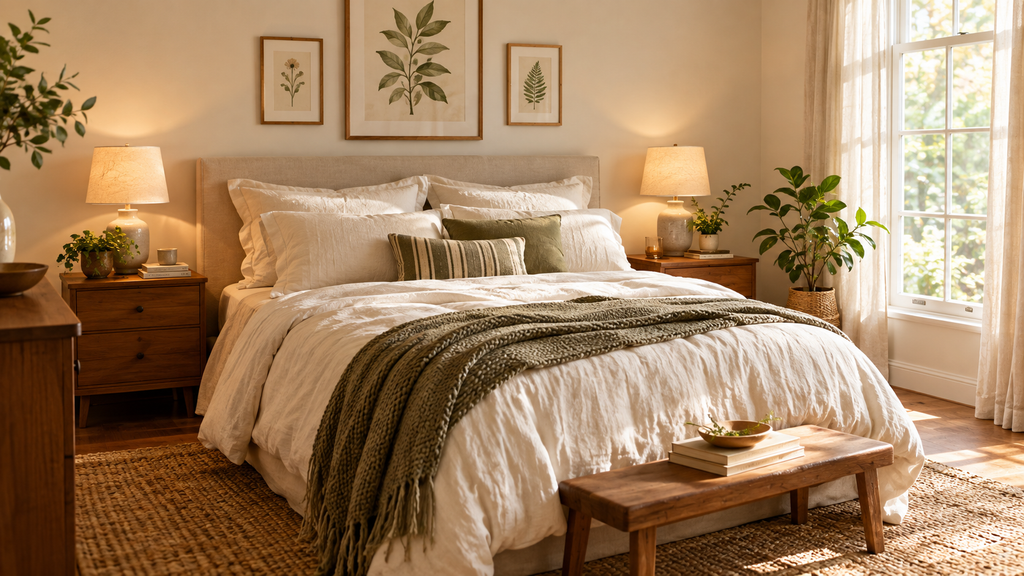
Use comfortable bedding and layer different textures rather than relying on lots of decorative pillows.
Add a bedside lamp with soft light. Keep the nightstand relatively simple. A book, small vase, candle, or glass of water may be all you need.
Curtains can also make a major difference.
If the room feels visually harsh, soft fabric around the windows can help.
And don’t underestimate the importance of leaving some empty space.
A bedroom filled with furniture and accessories can feel busy instead of restful.
11. Decorate for the Season Without Turning Your Home Into a Theme
Seasonal decorating can be fun, but you don’t need to replace half your home every few months.
Instead, make small changes.
In autumn, bring in warm-colored pillows, branches, pumpkins, woven baskets, or a textured throw.
For winter, heavier blankets and softer lighting can create a cozy atmosphere.
In spring, lighter fabrics and fresh greenery can make a room feel brighter.
The trick is to keep the main furniture and larger pieces relatively timeless.
Then seasonal decoration becomes a small refresh rather than an expensive project.
This approach also makes your home feel more natural because you’re responding to the season without turning every surface into a themed display.
12. Leave Some Imperfection
This might be the most important tip on the list.
A beautiful home doesn’t have to look untouched.
Real homes have books on the coffee table. Blankets get folded imperfectly. A chair may have a jacket hanging over it. Someone leaves a mug on the kitchen counter.
That’s normal.
The current move toward more personal, character-filled interiors is partly a reaction to rooms that look beautiful in photographs but don’t always feel comfortable to live in. Recent design reporting has highlighted a growing interest in rooms with personality, memory, humor, vintage elements, and visible signs of life.
So don’t remove every personal object simply because it doesn’t match.
If you love it, find a place for it.
Your home should reflect the people who live there—not an imaginary showroom visitor.
A Simple Cozy Home Decor Checklist
If you want to make your home feel warmer without spending a lot of money, start here:
- Add one or two sources of warm, soft lighting
- Introduce natural wood or woven textures
- Mix old and new pieces
- Add a comfortable throw to the sofa
- Display a few meaningful objects
- Bring in a plant or natural branches
- Use warm accent colors
- Add artwork to one empty wall
- Consider a properly sized area rug
- Simplify your bedroom
- Make small seasonal changes
- Keep some imperfections that make the home yours
You don’t need to do all twelve.
Choose two or three that fit your home and your budget.
The Best Home Decor Doesn’t Feel Overdecorated
There is a difference between a room that is decorated and a room that feels good to live in.
The first can be filled with beautiful things.
The second has atmosphere.
Maybe it’s the warm light from a lamp in the corner. Maybe it’s an old wooden table you’ve had for years. Maybe it’s a blanket that is always sitting on the sofa because everyone in the family uses it.
Those details are what turn a house into a home.
And you don’t need to spend thousands of dollars to create them.
Start with what you already own. Move a few things around. Add texture. Soften the lighting. Bring in something natural. Display something that has a story.
Then live with the room for a while.
The best decorating decisions aren’t always the ones that make a room look impressive for five minutes. They’re the ones that make you want to come home at the end of the day.
That is what cozy home decor is really about.