
If you have ever stared at a bare corner in your living room and felt like something was missing, you are definitely not alone. Over the last few years, our relationship with our living spaces has completely shifted. We are spending more time indoors, working from home desks, and craving a tangible connection to the natural world. Filling that void with greenery isn’t just about aesthetics anymore—it has become a full-scale lifestyle movement.
Whether you are dealing with a tiny, low-light studio apartment in downtown Chicago or a sprawling suburban ranch-style home in Texas with floor-to-ceiling windows, bringing the outdoors in is the ultimate upgrade. But let’s be honest: keeping houseplants alive can sometimes feel like a high-stakes guessing game. One minute your fiddle-leaf fig is thriving, and the next, it is dropping leaves like it is staging a silent protest.
This guide is designed to cut through the noise, skip the overly clinical botanical jargon, and give you a realistic, engaging roadmap to curating, styling, and actually keeping your indoor jungle alive and thriving.
Why Your Home Desperately Needs a Green Upgrade Beyond looking effortlessly chic on your Instagram feed or Zoom background, indoor plants pull double duty as natural wellness boosters. Scientific studies by NASA and various universities have long backed up what plant parents already intuitively know: houseplants actively clean the air by absorbing toxins and releasing fresh oxygen.
Furthermore, tending to plants introduces a rare moment of mindfulness into our hyper-digital daily routines. Taking five minutes on a Saturday morning to check soil moisture, wipe down dusty leaves, or mist a fern provides a grounding ritual that no smartphone app can replicate. It slows down time, reduces daily cortisol levels, and turns a generic house into a living, breathing home.
Top Trendsetting Indoor Plants for American Homes in 2026 Plant trends evolve just like interior design styles. Right now, American homeowners are leaning toward architectural statements, ultra-low-maintenance greens, and whimsical textures. Here are the absolute standout varieties dominating modern interior design:
- The Alocasia Polly (African Mask): Known for its striking, arrow-shaped dark green leaves and bold white veins, this plant looks like a living piece of modern art. It loves bright, indirect light and a humid environment (making it a bathroom superstar).
- The Treubii Moonlight Pothos: If you thought you knew pothos plants, think again. This cultivar features thick, silvery-green leaves that practically glow in natural light. It is notoriously forgiving, making it the holy grail for beginners.
- The ZZ Plant (Zamioculcas zamiifolia): The undisputed king of resilience. With its waxy, succulent-like foliage, it stores water in its underground rhizomes, meaning it can survive weeks of neglect and low light. Perfect for that dark office corner.
- The Cast Iron Plant (Aspidistra elatior): Earning its name honestly, this deep-green beauty shrugs off low light, erratic watering, and fluctuating indoor temperatures. It is the ultimate indestructible companion for busy professionals.
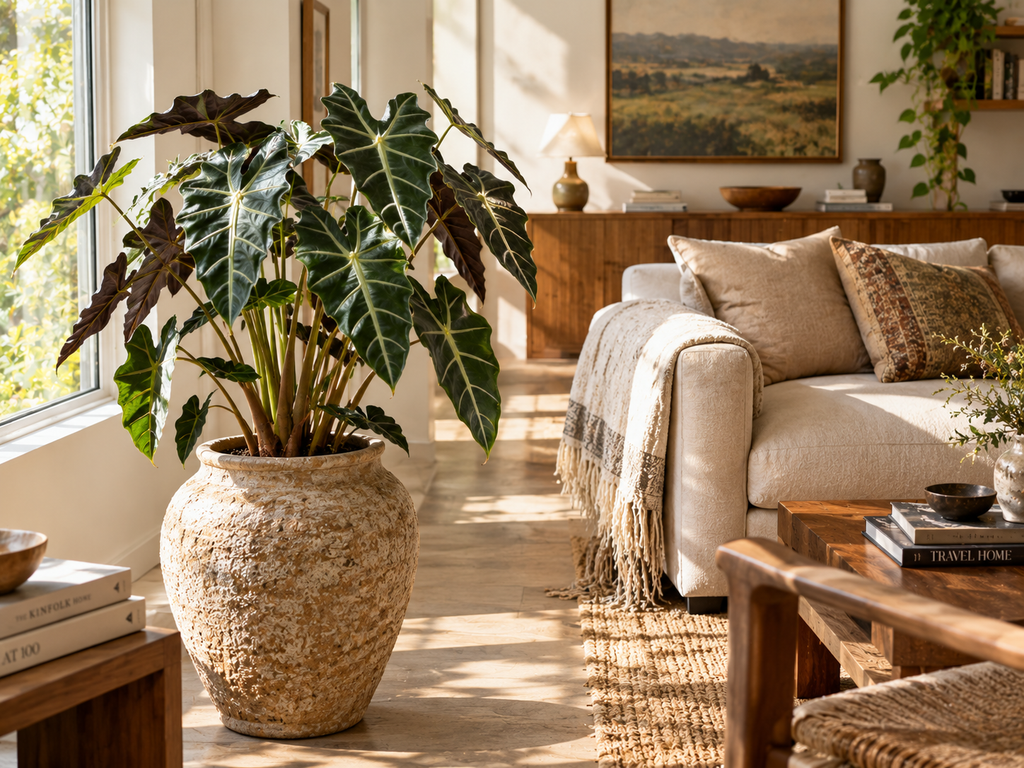
Designing With Plants: Pro Styling Secrets Throwing a random plastic pot on a windowsill simply will not cut it anymore. Plants are interior design elements, and how you style them dictates the entire vibe of a room.
- Play with Height and Scale: Avoid keeping all your plants at the exact same eye level. Mix things up by placing a tall, cascading plant like a Philodendron Brasil on a high bookshelf, a medium statement plant like a Monstera Deliciosa on a stylish mid-century modern plant stand, and small succulents on a coffee table tray.
- Invest in Quality Planters: The container matters just as much as the plant. Swap out basic nursery plastic pots for terracotta with patina, matte ceramic cylinders, or woven seagrass baskets. Textural contrast instantly elevates the look of any room.
- Create Plant Clusters: Nature doesn’t do solitary confinement. Group plants of varying heights, leaf shapes, and pot colors together in odd numbers (threes or fives work best) to create dynamic, organic focal points in empty corners.
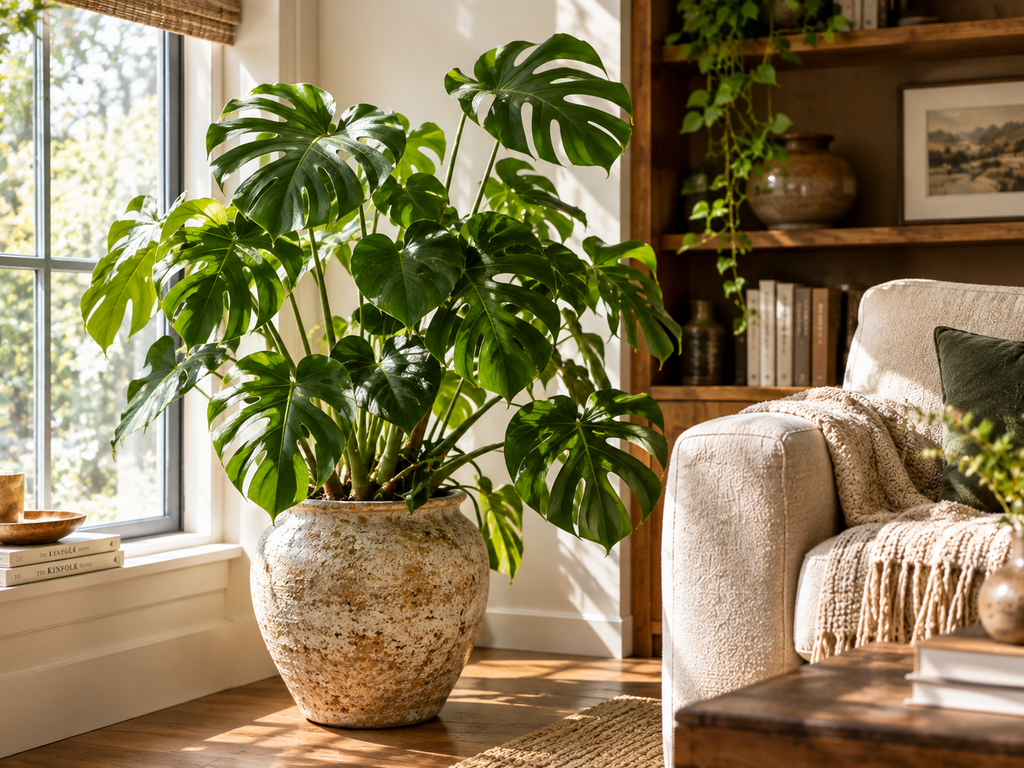
The Golden Rules of Plant Care (Without the Overwhelm) You do not need a degree in botany to keep plants alive. Master these three foundational pillars, and you will beat the odds:
- The Finger Test for Watering: Ditch the rigid watering schedule (like “water every Tuesday”). Instead, stick your index finger about two inches into the soil. If it feels dry, it is time for a drink. If it feels damp, leave it alone. Overwatering is the number one silent killer of indoor plants.
- Light Matters More Than You Think: North-facing windows offer cool, gentle light; south-facing windows blast intense, direct sun. Match your plant’s natural habitat to the specific window orientation in your room.
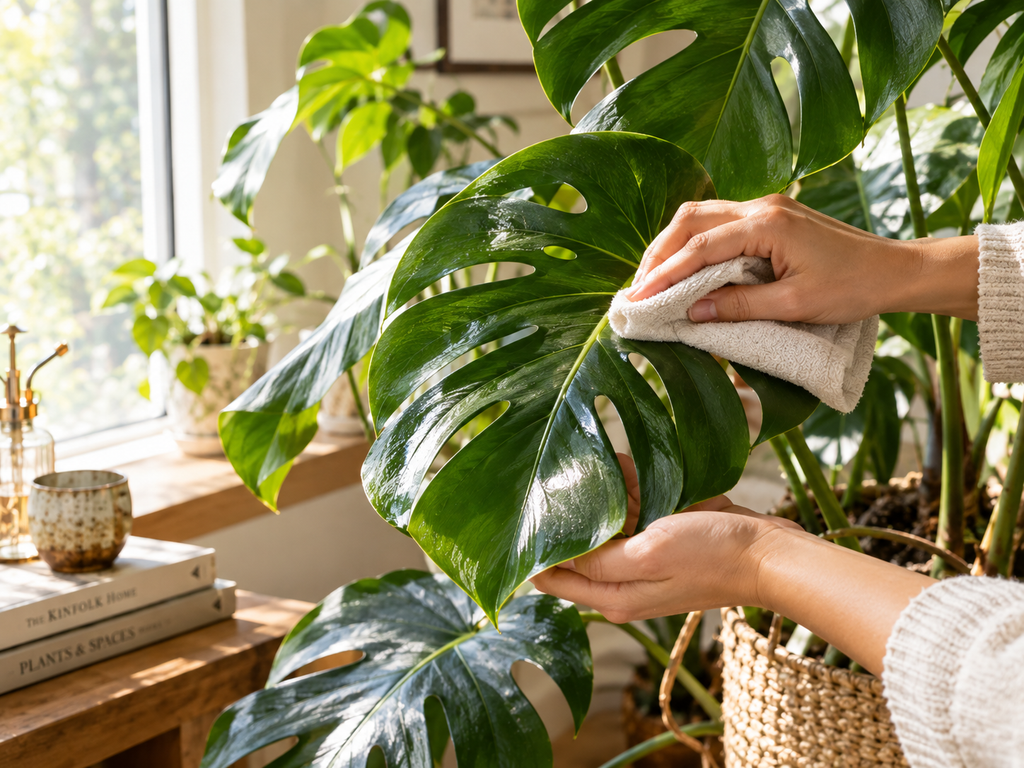
- Dust Control: Indoor plants collect household dust just like your furniture. Once a month, take your larger-leaved plants (like Monsteras or Rubber Trees) to the sink and gently wipe their leaves with a damp microfiber cloth. This allows them to absorb maximum sunlight and keeps them looking glossy.
Wrapping It Up Transforming your living space into a thriving indoor oasis doesn’t happen overnight, and it is completely okay if you lose a leaf or two along the way. Every plant parent—even the experts—has a graveyard of past botanical experiments behind them. Start small, pick one or two resilient varieties that match your home’s lighting, and enjoy the slow, rewarding process of watching your indoor sanctuary grow.
What is your absolute favorite plant in your current collection, or which one are you planning to bring home this weekend? Drop a comment below and let’s talk plants!