
There is something special about walking into a home filled with healthy green plants. A leafy plant beside a sunny window, a trailing vine on a bookshelf, or a small pot on the kitchen counter can make an ordinary room feel warmer and more welcoming.
Indoor plants are not only decorative. They can help bring a sense of nature into busy homes, soften hard furniture lines, and make empty corners feel thoughtfully styled. The best part is that you do not need a huge house, a greenhouse, or years of gardening experience to start.
Whether you live in a small apartment, a suburban home, or a busy family household, the right indoor plants can fit naturally into your lifestyle. The key is choosing plants that match your home’s light, your watering habits, and the amount of care you can realistically provide.
1. Choose Indoor Plants Based on Your Home’s Light
Before buying a beautiful plant, look carefully at where you plan to place it. Light is one of the most important factors in indoor plant care. A plant that thrives beside a bright window may struggle in a dark hallway.
Most common houseplants prefer bright, indirect light. This means the room is bright, but the plant is not sitting in strong direct sunlight for long periods. East-facing windows often provide gentle morning light, while south- and west-facing windows can be much brighter and may need a sheer curtain.
Here is a simple guide:
- Bright indirect light: Near a bright window with filtered sunlight
- Medium light: A few feet away from a bright window
- Low light: A room with limited natural sunlight but some daylight
- Direct sunlight: Strong sunlight falling directly onto the leaves
Remember that low-light tolerant does not mean no-light. Every indoor plant needs some light to stay healthy. If your home is very dark, a small grow light may be more useful than choosing a plant and hoping it survives.
2. Start With Easy Indoor Plants
If you are new to houseplants, choose varieties that can tolerate a few beginner mistakes. Some plants are much more forgiving than others, especially when watering is not always perfectly consistent.
Pothos
Pothos is one of the most popular beginner plants because it grows well in a range of indoor conditions. Its heart-shaped leaves look beautiful hanging from a shelf, climbing a support, or trailing from a plant stand.
Allow the soil to dry somewhat between waterings. Pothos can tolerate lower light, although brighter indirect light usually helps variegated varieties maintain their leaf patterns.
Snake Plant
Snake plants have upright, architectural leaves that suit modern, traditional, and minimalist homes. They are especially useful for people who sometimes forget to water.
Let the soil dry between waterings, and always use a container with drainage. Too much water is a more common problem than too little with snake plants.
Spider Plant
Spider plants have arching leaves and often produce small baby plants that hang from long stems. They look lovely in hanging baskets, on shelves, or in bright kitchens.
They prefer bright indirect light and generally like more consistent moisture than snake plants.
ZZ Plant
ZZ plants have glossy green leaves and a strong, upright shape. They are often chosen for offices, apartments, and rooms where plant care needs to be simple.
They store water in thick underground structures, so they should not be kept constantly wet.
Chinese Evergreen
Chinese evergreens come in several leaf colors and patterns, making them useful when you want greenery with extra visual interest. They can tolerate medium to lower light, depending on the variety.
For beginners, these plants are a good reminder that the easiest plant is not always the prettiest one in the store. It is the one that fits your home and routine.
3. Avoid the Most Common Watering Mistake
Overwatering is one of the biggest reasons indoor plants struggle. Many people assume that watering frequently shows love and care, but plant roots also need air around them. Soil that stays wet for too long can lead to root damage.
Instead of watering on the same day every week, check the soil first.
Try this simple method:
- Push your finger about an inch or two into the soil.
- Feel whether the soil is still damp.
- If it feels dry and the plant’s care needs allow it, water thoroughly.
- Let excess water drain from the bottom of the pot.
- Empty any water sitting in a saucer.
The right watering routine depends on the plant, pot size, soil, temperature, humidity, and amount of light. A plant in a bright, warm room may dry out faster than the same plant in a cool, shaded room.
Yellow leaves, soft stems, a sour soil smell, and constantly wet soil can be warning signs of overwatering. However, yellow leaves can have several causes, so look at the whole plant rather than relying on one symptom.
4. Use Pots With Drainage Holes
A beautiful pot is not automatically a good plant pot. Drainage is essential because it gives extra water a way to escape.
If you love decorative baskets, ceramic pots, or stylish containers without holes, use them as outer covers. Keep the plant in a plastic nursery pot with drainage holes, then place that pot inside the decorative container.
This approach offers two benefits:
- The plant receives proper drainage.
- You can remove the inner pot easily for watering and inspection.
Avoid allowing the plant to sit in a deep pool of water. Even plants that enjoy moist soil usually do not want their roots standing in water continuously.
Choose potting soil based on the plant. Cacti and succulents generally need a faster-draining mix, while tropical foliage plants may prefer a mix that holds some moisture but still drains well.
5. Make Your Living Room Feel More Natural
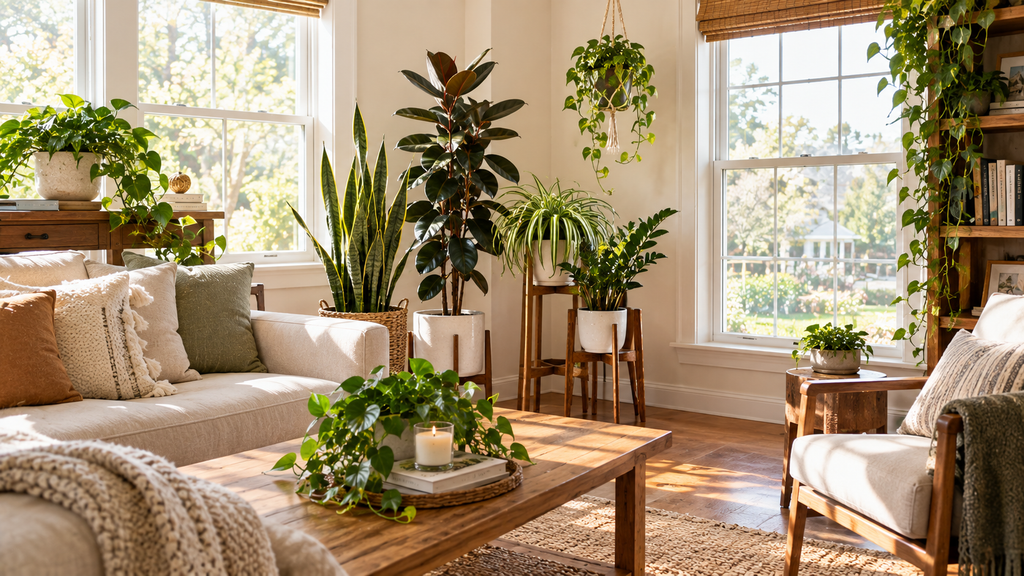
The living room is one of the easiest places to decorate with indoor plants. A tall plant can fill an empty corner, while smaller plants can add softness to coffee tables, shelves, and sideboards.
Try these simple arrangements:
- Place a tall snake plant beside a sofa.
- Put a rubber plant near a bright window.
- Let pothos trail from a bookcase.
- Add a small peperomia to a coffee table.
- Use a plant stand to create different heights.
- Group three plants in different-sized pots.
Avoid placing every plant in one corner. Spread greenery around the room so the space feels balanced.
For a coordinated look, use planters in similar colors such as white, terracotta, beige, charcoal, or natural wood. The plants can be different, while the containers create a visual connection.
6. Bring Greenery Into the Bedroom
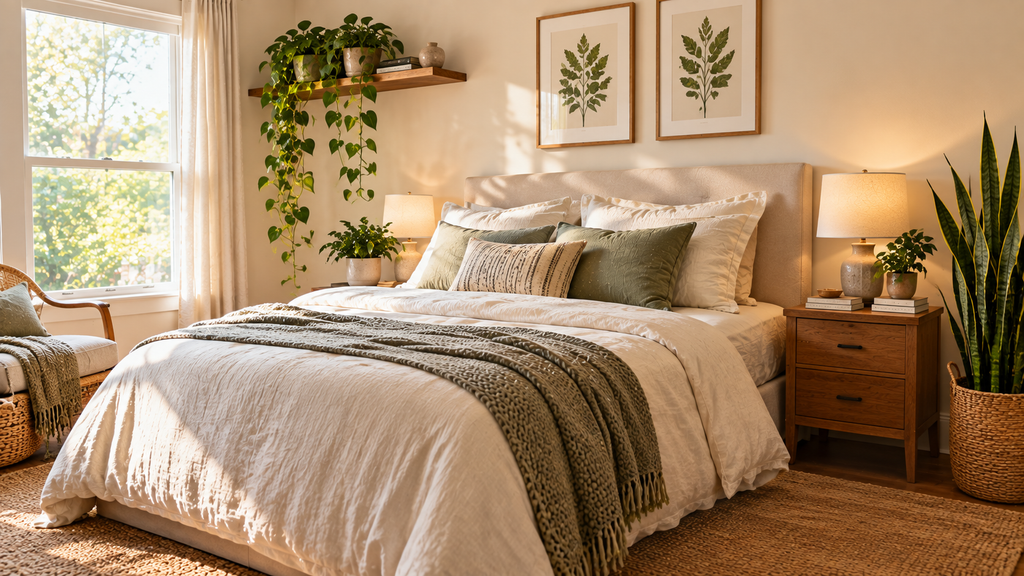
A bedroom can feel calmer when decorated with a few carefully chosen plants. Instead of filling the room with too many pots, select one or two plants that suit the available light and your care routine.
A snake plant on a dresser, a small pothos on a shelf, or a parlor palm near a bright window can add a natural touch without making the room feel crowded.
Keep plants away from areas where they may be knocked over while sleeping. Also, avoid placing damp soil, fallen leaves, or standing water near bedding.
The goal is not to create a jungle in every room. A small amount of greenery can be enough to make a bedroom feel fresh and personal.
7. Choose Pet-Safe Plants Carefully
If you have cats or dogs, plant safety should be part of your buying decision. Some popular houseplants can be harmful if chewed or eaten by pets.
Pet-friendly options often include:
- Spider plant
- African violet
- Parlor palm
- Peperomia
- Certain orchids
- Some varieties of bromeliads
Plant safety can depend on the exact species or variety, so check a reliable plant-toxicity database before bringing a new plant home. The ASPCA maintains a useful list of toxic and non-toxic plants for cats and dogs.
Even plants considered non-toxic can cause stomach upset if a pet eats a large amount. It is still wise to place plants where curious pets cannot easily reach them.
For homes with pets, hanging baskets, tall plant stands, and wall shelves can provide extra protection, although secure placement is important.
8. Increase Humidity the Right Way
Many popular houseplants come from tropical or subtropical environments and may appreciate more humidity than a heated or air-conditioned home provides.
Dry indoor air can be especially noticeable during colder months when heating systems are running. Brown leaf tips, crispy edges, and curling leaves may sometimes be related to dry conditions, although watering, light, and pests can also cause similar symptoms.
You can increase humidity by:
- Grouping several plants together
- Using a room humidifier
- Placing plants away from heating and cooling vents
- Using a pebble tray carefully
- Keeping plants in naturally more humid rooms
If you use a pebble tray, keep the plant pot above the water level. The bottom of the pot should not sit directly in water.
Misting is often less effective than people expect because the moisture evaporates quickly. A humidifier is usually a more consistent option when the room is very dry.
9. Keep Leaves Clean
Dust can collect on broad leaves and make plants look dull. Gently cleaning the leaves also helps you notice pests, damaged areas, or new growth.
For plants with large, smooth leaves:
- Use a soft, damp cloth.
- Support the leaf from underneath.
- Wipe gently from the base toward the tip.
- Avoid harsh cleaning products or leaf-shine sprays.
For smaller or delicate plants, a gentle shower with room-temperature water may be easier, provided the pot drains well and the plant can dry afterward.
Clean leaves also make indoor plants look more attractive in photographs, especially when you are styling a living room, home office, or entryway.
10. Feed Plants Carefully
Indoor plants need nutrients, but more fertilizer is not always better. Too much fertilizer can damage roots and leave salt buildup in the soil.
Use a balanced houseplant fertilizer according to the product instructions. Many plants need more active feeding during periods of growth and less during slower periods.
Before fertilizing, make sure the plant is not already stressed by dry soil, root problems, pests, or sudden changes in light. Fertilizer cannot fix an underlying care problem.
A healthy plant with suitable light, watering, and soil usually benefits more from consistent basic care than from frequent feeding.
11. Know When to Repot
A plant does not need a new pot simply because it has been in the same container for a long time. Repotting is most useful when roots have filled the container, water runs straight through the soil, growth has slowed, or the plant becomes unstable.
Signs that a plant may need repotting include:
- Roots circling heavily around the root ball
- Roots growing out of drainage holes
- Soil drying out unusually fast
- The plant becoming top-heavy
- Water refusing to soak into the soil
Choose a pot only slightly larger than the current one. Moving a small plant into a very large pot can leave too much wet soil around the roots.
Repotting is also a good opportunity to inspect roots, replace tired soil, and check for pests. Handle the plant gently and give it time to adjust afterward.
12. Create a Small Indoor Plant Corner
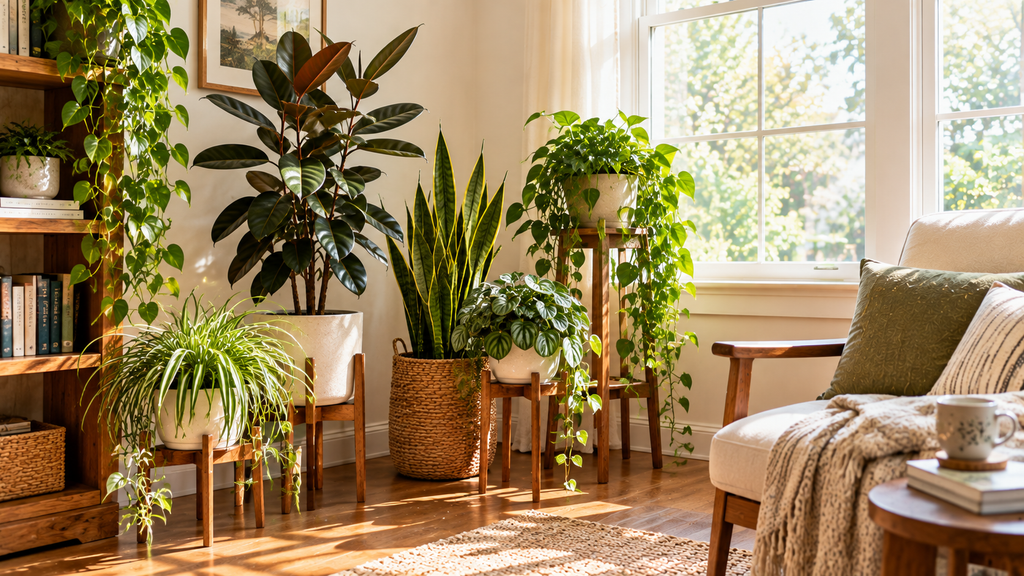
You do not need plants in every room to enjoy an indoor garden. A dedicated plant corner can become a beautiful feature in your home.
Choose a bright area and combine:
- One taller plant
- Two medium plants
- A small tabletop plant
- A wooden or metal plant stand
- A basket for gardening supplies
- A simple watering can
Use different heights so the plants do not look like a flat row. Keep enough space between pots for watering, cleaning, and air movement.
A plant corner near a window can also become a peaceful place to read, enjoy coffee, or take a break from screens.
13. Propagate Easy Plants for More Greenery
Propagation is a fun and affordable way to grow your indoor plant collection. Some plants can produce new plants from stem cuttings, leaves, or baby plantlets.
Pothos and philodendrons can often be propagated from stem cuttings placed in water. Spider plants produce small baby plants that can be rooted in soil. Some succulents can also be grown from healthy leaves or cuttings, depending on the variety.
A simple propagation process is:
- Select a healthy section of the plant.
- Use clean scissors.
- Place the cutting in water or suitable soil.
- Keep it in appropriate light.
- Watch for roots or new growth.
- Move it into a small pot when established.
Propagation takes patience. Not every cutting will succeed, but the process is a great way to learn how plants grow.
14. Watch for Pests Early
Indoor plant pests can spread quickly when several plants are close together. Check new plants carefully before bringing them into your home.
Look underneath leaves and around stems for:
- Sticky residue
- Fine webbing
- White cotton-like insects
- Tiny moving dots
- Yellowing or distorted new growth
If you find pests, move the affected plant away from others and identify the problem before treating it. A gentle shower, wiping leaves, or insecticidal soap may help with some common pests, but always follow the product label.
Avoid using strong household cleaners on leaves. They can cause additional damage and make the original problem harder to solve.
15. Build a Simple Weekly Plant-Care Routine
Indoor plant care becomes easier when it is part of your normal routine. You do not need to spend hours every day checking every pot.
Once a week, take a few minutes to:
- Check soil moisture
- Look for pests
- Remove yellow or damaged leaves
- Rotate plants if needed
- Clean dusty leaves
- Check whether plants are receiving enough light
- Empty water from saucers
- Notice new growth or changes
Keep a small watering can, scissors, soft cloth, and spare potting soil in one place. Having basic supplies nearby makes plant care feel simple rather than like a major project.
Final Thoughts
Indoor plants can make a home feel more comfortable, colorful, and connected to nature. The secret to keeping them healthy is not buying the most expensive varieties or following a complicated schedule. It is choosing plants that suit your space and learning what each one needs.
Start with one or two forgiving plants. Pay attention to light, check the soil before watering, use containers with drainage, and make changes slowly. Over time, you will become better at understanding when a plant needs more light, less water, a larger pot, or simply a little patience.
A healthy indoor garden does not have to be large. Even a single thriving plant on a windowsill can bring life and personality into your home.